Calacatta vs. Carrara — What’s the Difference When They’re Placed in a Living Space?
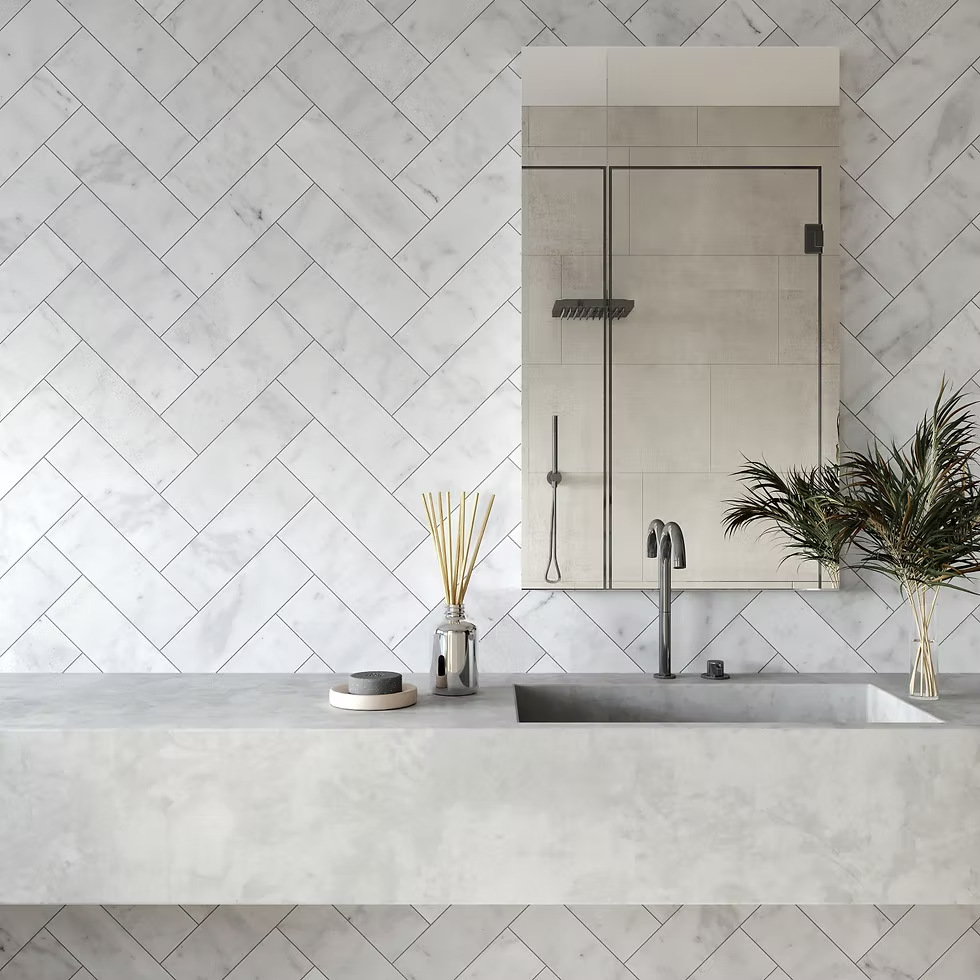
If you’ve ever stood inside a stone showroom, chances are you’ve hesitated between Calacatta and Carrara. Both carry that unmistakable Italian elegance — bright white surfaces, natural veining, and a refined visual softness at first glance. And because they look so similar on the surface, many people choose based on instinct alone, simply picking whichever slab feels more beautiful without fully understanding the difference behind it.
The thing is, with natural marble, the real distinction never appears on a small sample piece or a showroom photo. It only becomes clear once the stone is placed inside an actual living space — when light shifts throughout the day and when the material becomes part of daily life. If the initial choice isn’t aligned with the space, the mismatch slowly reveals itself over time.
So understanding Calacatta and Carrara isn’t about deciding which one is “better.” It’s about choosing the one that fits the atmosphere you want your space to create.
Why Are These Two Stones Often Confused?
Both Calacatta and Carrara are natural marble sourced from Italy, belonging to the same family of white marble with soft organic veining. Because of this shared character, they can look very similar at first glance.
In many showrooms, the two are even displayed side by side, making the distinction even harder to notice. But the important part isn’t how similar they look — it’s how differently they behave once integrated into a real space. And without understanding that difference, it’s easy to choose a stone that looks beautiful on display but feels disconnected once applied in reality.
How Do Calacatta and Carrara Feel in Real Spaces?
Once installed in a living environment, the difference becomes immediately noticeable — not through small details, but through the overall atmosphere they create.
Carrara has a slightly grey-toned white base with softer, more evenly distributed veining. In a space, it feels calm, balanced, and understated. Rather than demanding attention, Carrara works as a visual foundation that allows surrounding materials and furniture to coexist more harmoniously.
Calacatta, on the other hand, features a brighter white background paired with larger, bolder veins and stronger contrast. Once introduced into a space, it naturally becomes a focal point. It catches the eye instantly and creates a more luxurious, statement-driven presence.
Simply put: Carrara acts as the foundation, while Calacatta becomes the highlight. The choice isn’t about which one is more beautiful — it’s about the role you want the material to play within the space.
The Value Isn’t in the Price — It’s in the Application
In most cases, Calacatta is more expensive than Carrara due to its rarity and the higher level of selection required for each slab. Carrara is more common, making it more accessible in terms of cost.
But choosing based on price alone is often a mistake. A more expensive material doesn’t automatically mean a better result.
If Calacatta is used in the wrong setting, it can overwhelm the space visually. Meanwhile, Carrara used in an area that needs a strong focal point may end up feeling too subtle.
The real value lies not in choosing the more premium stone, but in placing the right stone in the right environment.
When Should You Choose Carrara — and When Should You Choose Calacatta?
If you’re looking for a material that feels versatile, balanced, and easy to integrate with other finishes, Carrara is usually the better option. It performs especially well in spaces that already contain multiple textures or materials and need visual harmony.
If the goal is to create a stronger statement — something more luxurious and immediately eye-catching — then Calacatta is the more suitable choice. However, it requires a design approach with enough restraint and control to prevent the space from feeling visually heavy or unbalanced.
In the end, the most important question isn’t which stone is more impressive. It’s what the space actually needs.
Common Mistakes When Choosing Marble
One of the most common mistakes is selecting marble based only on photos. Marble is a natural material, and every slab is unique, which means images rarely reflect the true character of the stone.
Lighting also changes everything. The lighting inside a showroom can create a completely different impression compared to the natural lighting conditions of the finished space. This often leads to choices that feel different once installed.
Another common mistake is not reviewing the exact slab that will be used for fabrication. With dramatic-vein marble like Calacatta, the way the stone is cut and arranged significantly impacts the final result.
These details are often overlooked, but they directly shape the long-term experience of living with the material.
Understanding the Difference Means Avoiding Regret Later
Ultimately, the question “What’s the difference between Calacatta and Carrara?” goes beyond comparing technical characteristics. It comes down to understanding the role each material plays within a living space.
A well-designed space doesn’t come from choosing the most expensive material. It comes from making choices that feel intentional and aligned with the overall atmosphere.
When the decision is right from the beginning, there’s no need to correct it later. And at that point, the value of the material no longer exists only on the surface — it becomes part of how the space lives and ages over time.
Related articles

How Is the Premium Housing Construction Trend in Ho Chi Minh City Changing?