CORPORATE SPACES
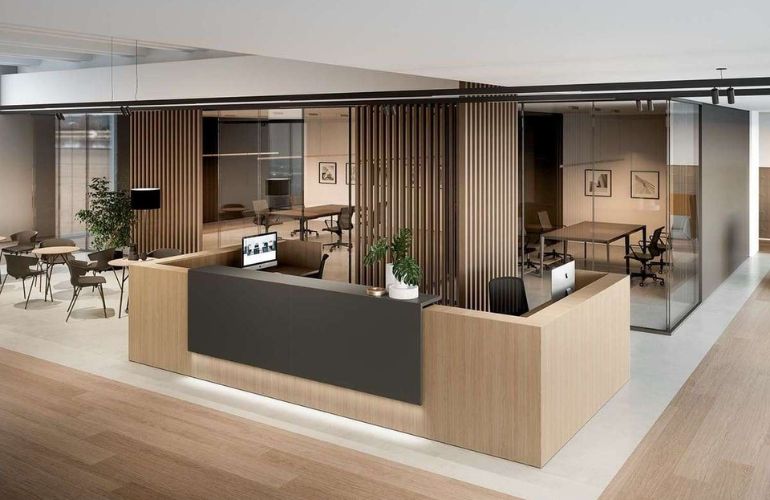
Space is a brand manifesto.
At a certain stage of development, businesses no longer need to say much about who they are. How they operate, how they work, and especially the spaces they occupy become a form of brand statement.
An office is no longer just a workplace. It reflects how a company thinks, how it is structured, and how it wants to be perceived. A well-designed space not only improves efficiency but also clearly communicates brand identity from the very first experience.
Therefore, corporate space is no longer an aesthetic exercise, but a system designed to directly support the operational model.
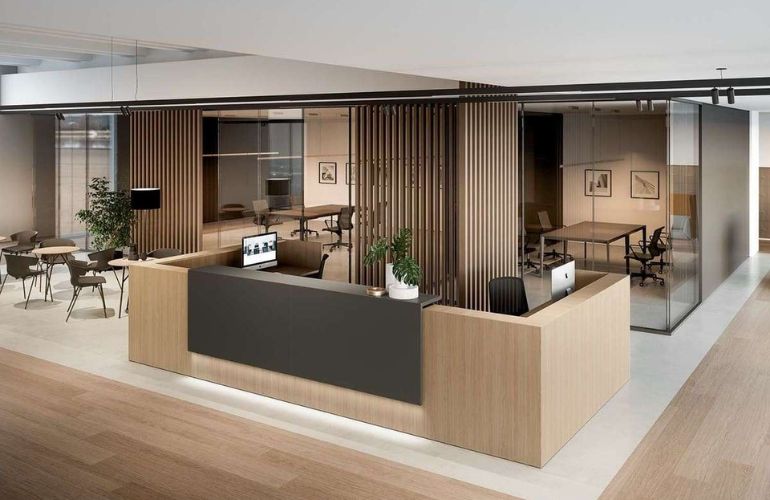
Space Begins with How a Business Operates
No two businesses operate in the same way, which means there can be no universal spatial formula.
Some companies require high-speed communication and constant cross-team connectivity. Others prioritize focus, where individuals need sufficient private space for deep work. Some models also require a clear reception area, serving as the first layer of communication with clients and partners.
This operational logic becomes the starting point of design. When the business model is clearly understood, space is no longer created based on intuition, but becomes part of the operational structure itself.
Space Designed to Support Performance
In projects for service-based companies, the goal is not to create an impressive office, but to build an environment where work flows smoothly and consistently.
Spaces are often designed in a controlled open layout rather than being divided into too many closed rooms. Quick interaction points are placed strategically to support natural communication without disrupting workflow.
Natural light is maximized to reduce fatigue during long working hours. Materials are kept neutral—visually calm, non-distracting, yet still refined and professional.
When space is properly organized, users do not need to adapt to it. Instead, the space adapts to how they work. This is when operational efficiency is truly optimized.
When the Office Becomes a Tool of Positioning
In industries such as finance or high-end services, the office is not only for internal use but also a representation of the brand in the eyes of clients and partners.
Reception areas are designed to be distinct yet remain integrated within the overall composition. Light, materials, and proportions are carefully controlled to create a refined, professional impression without creating emotional distance.
Meanwhile, internal work areas are optimized for focus and productivity. Operational efficiency and brand image are not separated but designed simultaneously within the same spatial system.
At this stage, the office is no longer just a workplace—it becomes a tool for brand positioning.
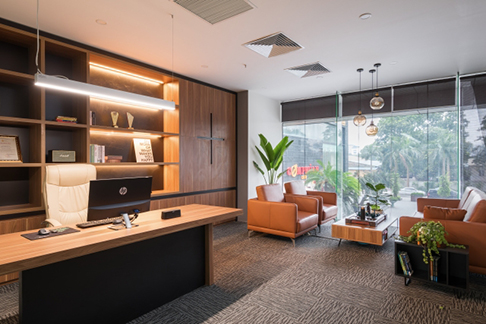
When Minimalism Becomes a Strategic Choice
Not every business requires a complex space. In many cases, minimalism is the most effective solution.
A true minimalist space is not about reduction for its own sake, but about removing everything that does not serve operations. What remains is only what is essential.
Distances between workstations, lighting layouts, and spatial proportions are all carefully considered to reduce noise and enhance focus. The space does not create visual pressure but maintains a stable and consistent working rhythm.
When done correctly, minimalism does not reduce value—it clarifies it.
The Common Ground Lies in Execution
Although every business has different needs, successful spaces share a common approach: they start with understanding, then are executed with consistency.
No detail is random. From spatial planning to material selection and finishing, every element is connected within a unified system.
This consistency ensures that the space not only performs well at handover but continues to operate effectively over time.
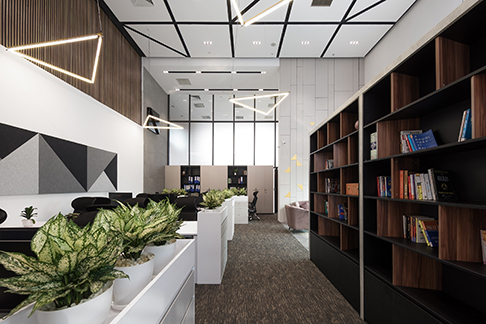
The Right Space Speaks for Itself
Ultimately, a high-end corporate space is not defined by how visually impressive it is, but by how accurately it reflects the way a business operates.
When the standards are clearly defined from the beginning, the space naturally becomes part of the brand message. There is no need for excessive explanation, because its daily operation already says everything.
At that point, space is no longer a supporting element—it becomes part of how a business defines itself.
Build Trust. Create Legacy.
Related articles

SIGNATURE RESIDENCE